What is knowledge management and why does it matter in April 2026
You spend more time searching for answers than you do building. Your new hire asks about the payment service, and nobody’s quite sure why it was designed that way because the person who built it left last year. Knowledge management exists to solve this exact problem: preserving the context behind your code so teams can find answers without archaeology. But here’s the real issue: documentation goes stale the moment you write it, and your codebase keeps moving. What you need is more than a place to store information. You need a system that keeps that information current as your reality changes.
TLDR:
- Knowledge management captures and organizes scattered insights, so critical information doesn’t vanish when team members leave and employees can easily find information needed to do their jobs.
- Companies using strong knowledge systems cut search time by 35% and boost productivity by 20-25%.
- Documentation goes stale the moment it’s written as codebases evolve faster than manual updates can keep pace.
- AI now automatically flags and updates outdated docs when code changes, converting maintenance from manual work to review.
- Falconer keeps documentation synchronized with your codebase automatically, so engineers find accurate answers without interrupting teammates.
What is knowledge management?
Knowledge management is the systematic process of capturing, organizing, sharing, and using the information that lives inside your organization. It turns scattered insights, decisions, and expertise into something structured and retrievable.
At its core, knowledge management exists to answer one question: how do you keep what your team knows from disappearing? Every conversation, code commit, and solved problem creates knowledge. Without a way to preserve and share it, that knowledge lives only in individual heads or buried in old Slack threads.
The goal is to make critical information accessible when people need it. Your codebase, documents, and decisions need to work together so teams can find answers without hunting through disconnected tools, switching context, or interrupting colleagues.
Types of knowledge in organizations
Organizations contain two fundamentally different types of knowledge, and the gap between them explains why so much valuable information gets lost.
Explicit knowledge is what you can write down and share: technical documentation, API specifications, onboarding guides, incident reports, architecture diagrams. This is the stuff that lives in your docs and can be transferred from one person to another without losing meaning.
Tacit knowledge is harder to pin down. It’s the intuition your senior engineer has for debugging production issues, the context your founding team carries about why certain decisions were made, the unwritten rules about how your codebase actually works versus how it’s supposed to work. This knowledge lives in people’s heads, built from experience and pattern recognition over time.
The tricky part? Tacit knowledge is often your most valuable asset, but it’s also the most fragile. When someone leaves or switches teams, that knowledge walks out with them unless you’ve found a way to capture it.
The knowledge management process
The knowledge management process runs through six connected stages that feed back into each other.
Knowledge creation happens during daily work: writing code, solving problems, making decisions. Knowledge capture records that information before it’s lost. Organization structures captured knowledge for others to use, while storage determines where it lives and how to protect it. Sharing makes knowledge accessible to the right people, and application puts it to work on real problems.
This isn’t a one-time checklist. Knowledge decays immediately after creation. Your codebase changes, your product evolves, your team makes new decisions that override old ones. The process only works when it loops back to the start, updating what you’ve captured to match current reality.
Why knowledge management matters in 2026
The stakes for knowledge management have never been higher. Knowledge management market growth from $961.44 billion in 2025 to $1,131.24 billion in 2026 reflects what engineering leaders already feel: you can’t afford to lose what your team knows.
When an engineer leaves, they take months of context with them. Your team spends the next quarter relearning decisions, rediscovering workarounds, and rebuilding mental models that person carried. Your best builders field the same questions repeatedly because answers live only in their heads or disappeared into expired Slack threads.
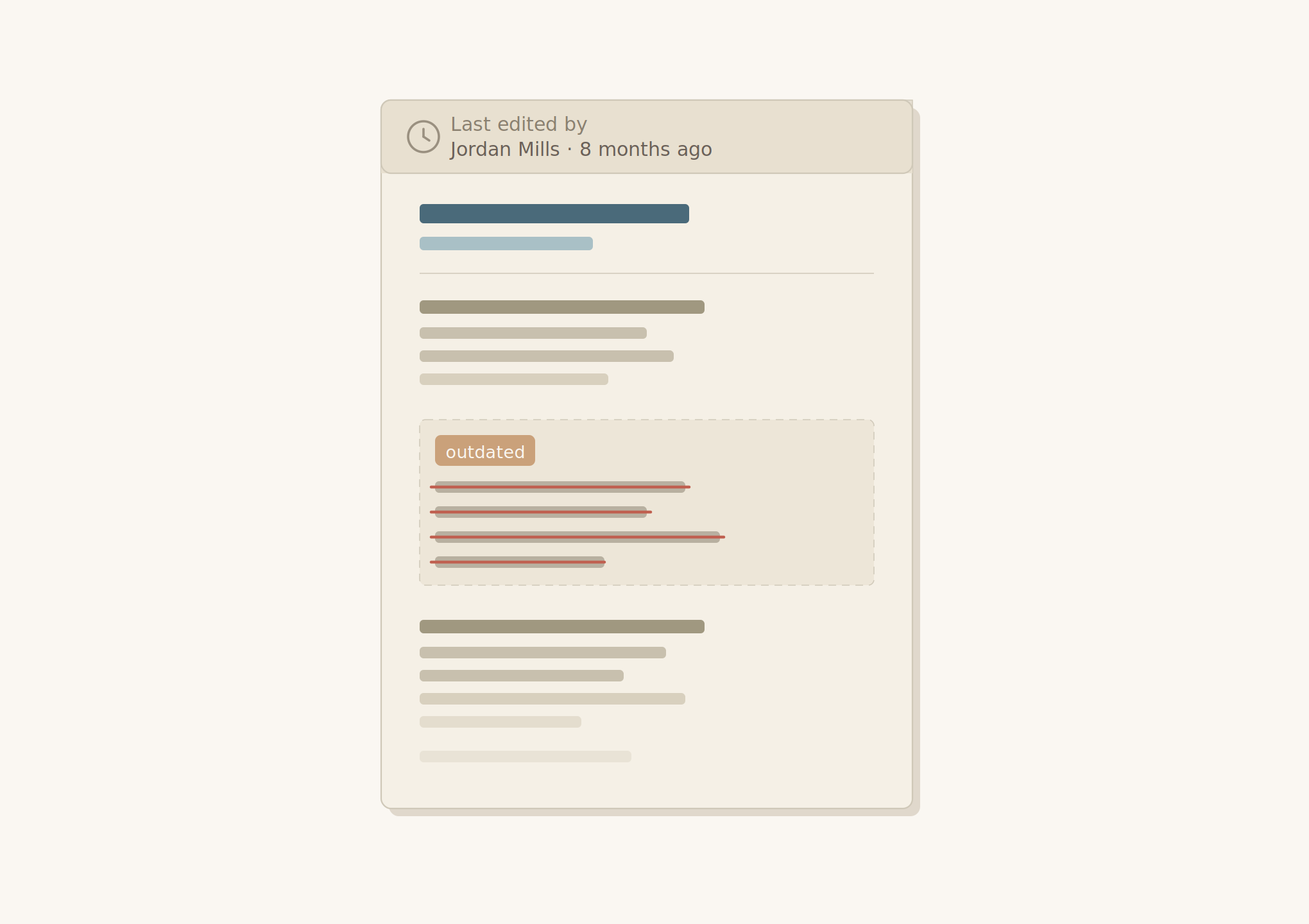
Software moves too fast for institutional memory to keep up. Your codebase changes daily, features ship, architecture evolves, and documentation written last month is already outdated. Without a system that captures and maintains this context, teams waste time searching for information that should be accessible.
The companies winning in 2026 treat knowledge as infrastructure. They’ve built systems that preserve context as it’s created and keep it current as reality changes.
Key benefits of knowledge management
Good knowledge management delivers measurable returns. A McKinsey Global Institute Report found that strong systems cut search time by 35% and lift productivity by 20-25%.
Onboarding accelerates when new hires access reliable documentation instead of waiting for explanations. What took months shrinks to weeks because context is documented and discoverable.
Decision-making improves when teams work from the same information. Instead of debating outdated assumptions or rediscovering past failures, people reference what’s already known and build on it.
Distributed teams stay aligned without constant meetings. Engineers in different time zones unblock themselves without waiting for responses. Questions get answered from documentation instead of interrupting whoever wrote the code.
The pattern holds: less time hunting, more time building. Less context lost, fewer mistakes from missing information.
Common knowledge management challenges
The theory of knowledge management sounds straightforward until you try to implement it.
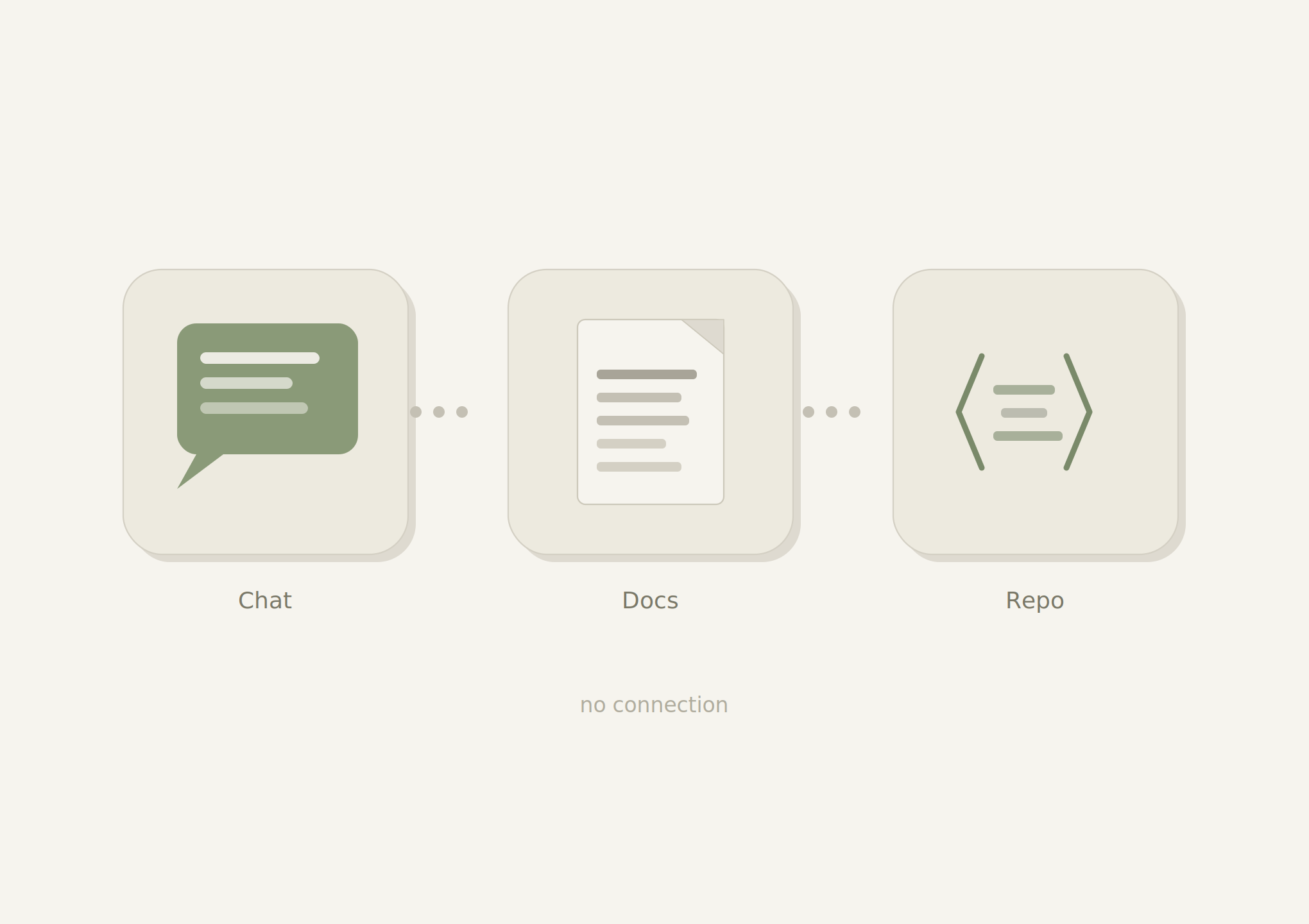
Tool fragmentation ranks high. 36% of companies use 3+ tools according to KMWorld research, meaning answers scatter across Confluence, Notion, Google Drive, Slack, wikis, and whatever else got added last quarter. Each tool becomes another place to search and source that might be outdated.
Converting tacit knowledge into something written poses a deeper problem. Your senior engineer knows how the system behaves under load, but that intuition comes from years of pattern recognition. Documenting it competes with shipping features, and documentation always loses that fight.
Keeping information current defeats most attempts. You write great docs, then the codebase changes and nobody updates them. Six months later, new hires follow outdated instructions and break things.
Culture creates the hardest obstacle. Knowledge hoarding happens when people get status from being the only one who knows how something works. Sharing requires trust that helping others succeed won’t diminish your own value.
Knowledge management systems and technology
Knowledge management systems range from basic wikis to AI-powered search engines, but what matters is how the tool fits your workflow.
Traditional systems like Confluence and SharePoint function as centralized repositories where teams publish documentation. They work when someone commits to writing and maintaining content, but most teams lack that bandwidth. The result is a graveyard of outdated articles nobody trusts.
Search-first tools like Glean and Guru index across multiple sources to surface answers from existing content. They help with discovery but don’t solve the staleness problem. Finding a document faster doesn’t help if it’s wrong.
The next generation maintains information automatically instead of relying on manual updates. These systems connect to your codebase, pull requests, and conversations to detect when knowledge changes. When code changes, documentation updates itself. When decisions happen in Slack, they get captured and structured.
The best knowledge management tech disappears into the background. It pulls from where your team already works and delivers answers where people need them.
| System type | Examples | How it works | Strengths | Limitations |
|---|---|---|---|---|
| Traditional repository systems | Confluence, SharePoint | Centralized wikis where teams manually publish and organize documentation | Structured content organization, version control, proven workflows | Requires constant manual maintenance, documentation quickly becomes outdated, depends on team discipline |
| Search-first tools | Glean, Guru | Index across multiple sources to surface existing content through intelligent search | Discovery across fragmented tools, unified search interface, reduces time hunting for information | Cannot verify accuracy or freshness of content, surfaces outdated information alongside current docs |
| AI-powered self-updating systems | Falconer | Connects to codebase and communications, automatically detecting changes and updating documentation | Documentation stays synchronized with code changes, converts tacit knowledge from Slack into structured docs, eliminates manual maintenance burden | Requires integration with development workflow and communication tools |
How AI is changing knowledge management
AI solves knowledge management’s core challenge: keeping information current. Documentation fails not because teams won’t create it, but because maintenance demands constant effort.
When a codebase changes, AI flags outdated docs. After an engineer merges a pull request affecting multiple services, the system spots related documentation and proposes updates based on the code diff. Updates that relied on manual memory now happen automatically.
Converting tacit knowledge to explicit documentation becomes simpler when AI structures Slack threads into readable guides. That discussion about your database choice? AI preserves it before it vanishes into thread history.
The work moves from writing everything to reviewing what AI generates from your team’s activity.
Self-updating knowledge for engineering teams
Engineering teams face a knowledge problem that compounds daily. Every merged pull request changes your codebase’s reality. Every architecture decision changes how systems connect. Docs written this morning are outdated by afternoon.
We built Falconer to match the speed your code actually changes. When an engineer updates a service, related docs get flagged and updated automatically. Pull requests trigger documentation updates. Slack decisions get captured and structured before they disappear. Your knowledge layer stays synchronized with your codebase instead of drifting further behind.
This creates a reliable source of truth that serves your team and coding agents. Engineers find accurate answers during onboarding without interrupting senior developers. AI tools access current context instead of hallucinating from stale information.
The result: smaller teams ship faster because time looking for information dramaticaly drops.
Final thoughts on making knowledge work
Good knowledge management practices don’t add more process to your team’s day. They capture what already happens and structure it so people can find answers when they need them. Documentation that updates itself removes the maintenance burden that kills every manual system. When your knowledge layer moves as fast as your codebase, teams ship faster because nobody’s blocked waiting for context. See how Falconer works for engineering teams building at speed.
FAQ
What’s the difference between explicit and tacit knowledge?
Explicit knowledge can be written down and shared directly: technical documentation, API specs, onboarding guides. Tacit knowledge lives in people’s heads: the intuition your senior engineer has for debugging production issues or the unwritten rules about how your codebase actually works.
How does AI keep documentation from going stale?
AI monitors your codebase and flags outdated docs when code changes. When you merge a pull request that affects multiple services, the system spots related documentation and proposes updates based on the code diff, turning what used to require manual memory into an automatic process.
Why do most knowledge management systems fail?
They rely on manual maintenance that never happens. Teams write great docs, then the codebase changes and nobody updates them. Six months later, the documentation is wrong and nobody trusts it anymore.
How long does it take to see productivity gains from knowledge management?
McKinsey research shows strong knowledge systems cut search time by 35% almost immediately. The bigger wins (faster onboarding, fewer interruptions, better decision-making) compound over weeks as your team builds trust in having reliable answers available.
Can knowledge management work for distributed teams across time zones?
Yes, this is where it matters most. Engineers in different time zones can unblock themselves from documentation instead of waiting hours for someone to wake up and answer their question, turning what used to require synchronous communication into self-service.